The Reunion That Took
More Than Three Centuries
A landmark exhibition celebrating the
Mohawk and American Tarbell family lines through
portrait paintings, impressionistic scenes and
a story finally told in full.
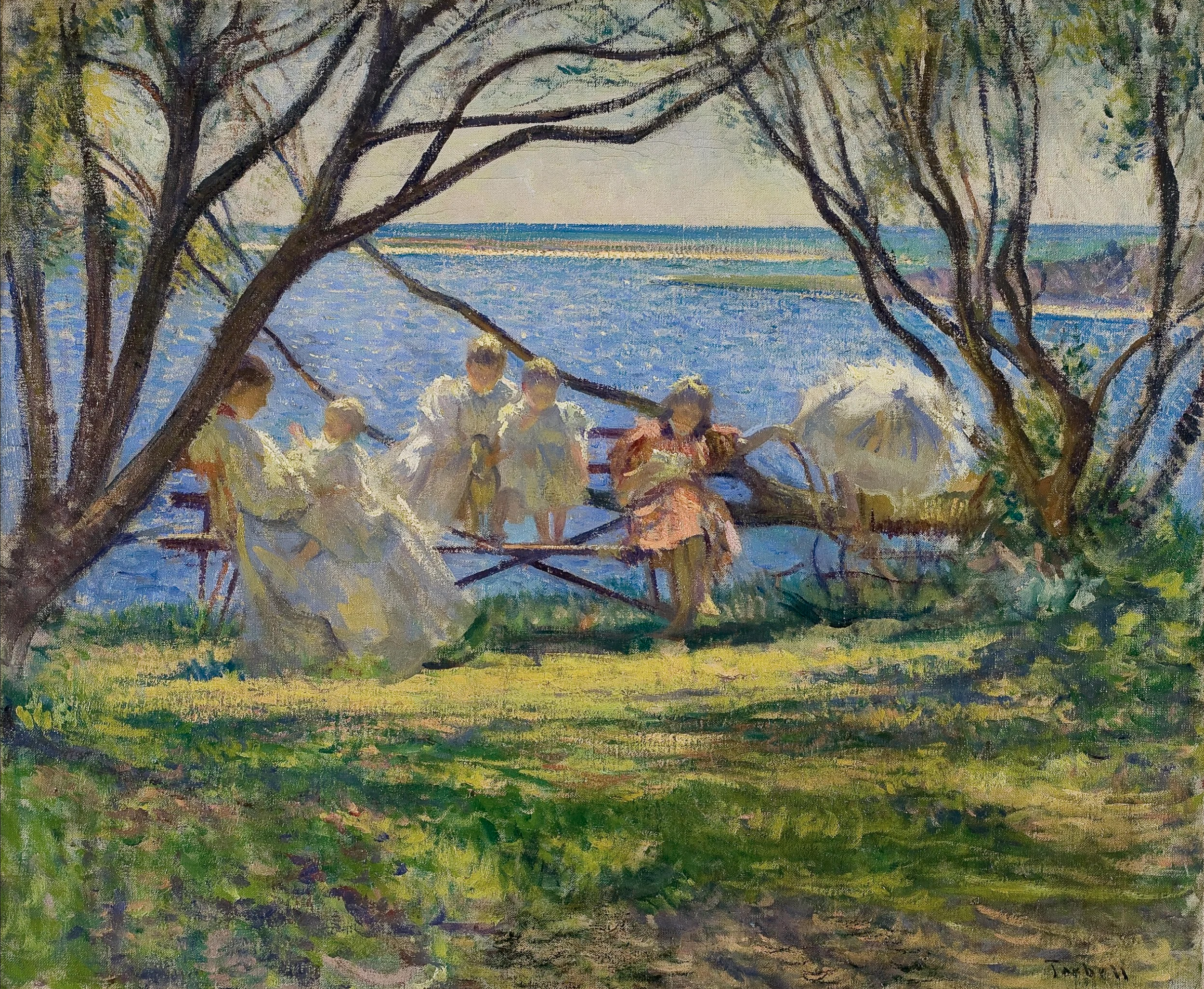
My Family at Cotuit by Edmund Charles Tarbell
In 1707, two boys of English descent and their sister were taken
from a farm located in Groton, Massachusetts.
The boys chose to stay with the Mohawk nation.
They raised families. They became chiefs.
More than three centuries later, the descendants of both lines
are finally in the same room.
This is not a story about what was lost.
It is a story about what not only survived but flourished.
The Line That Stayed
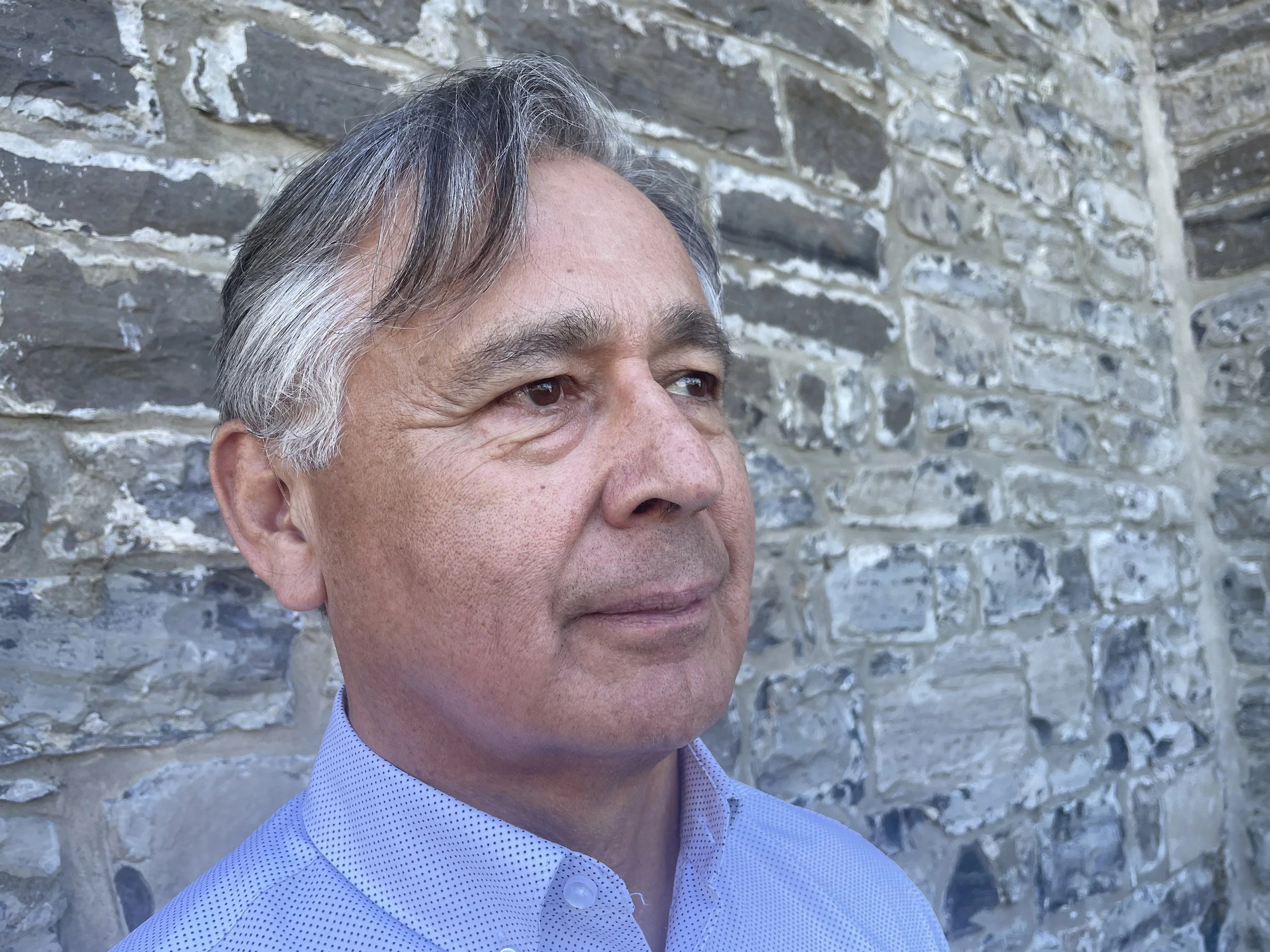
In 1707, John and Zachariah Tarbell were received by the Mohawk nation near Montreal. They learned the language. They married into the community. They were named by clan mothers.
Ten generations later, their descendants are chiefs, elders, language teachers, and artists in one of the most storied First Nation communities in North America.
Their name is Tarbell.
Their identity is Mohawk.
The Line That Remembered
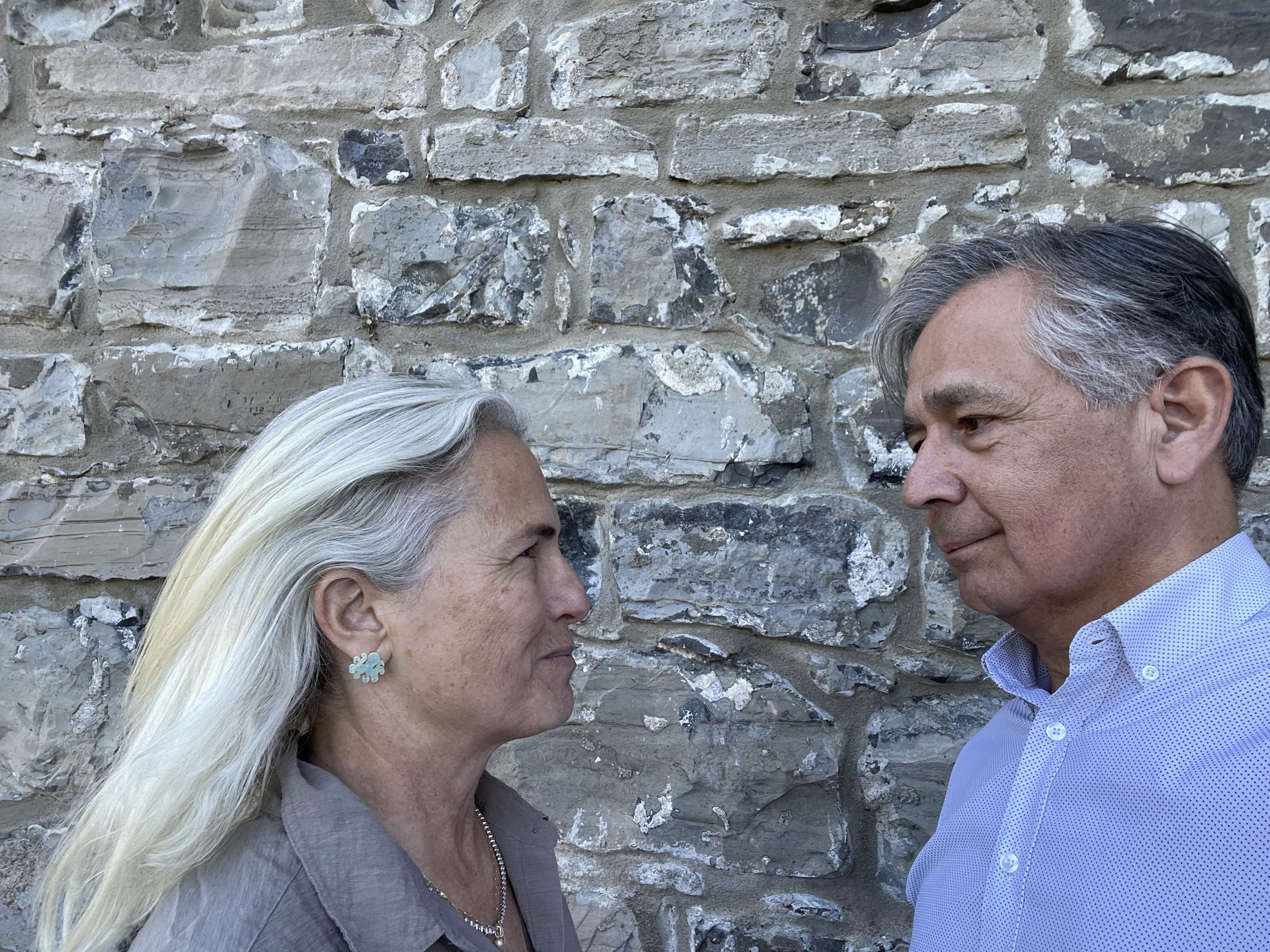
Thomas Tarbell, the brother who remained in Groton, built a family whose roots grew deep into New England soil. His descendants include Edmund Charles Tarbell, co-founder of the Boston School and one of the most celebrated American Impressionist painters of his era.
His great-granddaughter Elizabeth Souther Tarbell grew up in ECT's studio on the Piscataqua River. In 2024 she became Trustee of the Tarbell Charitable Trust. And asked the question that changed everything.
What if we finally told the whole story?
The Tarbells: Celebrating Our Mohawk and American Story
A five-year initiative opening in Groton, Massachusetts in May 2030 and traveling to other cities thereafter.
The paintings.
Works by Edmund Charles Tarbell — co-founder of the Boston School — are exhibited alongside newly commissioned portraits and scenes by the Tarbellites: seven contemporary artists trained in
Edmund Charles Tarbell’s tradition.
The scenes and portraits.
Newly commissioned paintings of significant Tarbell Mohawk leaders and community members painted by contemporary Tarbellites displayed at the Exhibition.
The venue.
The Prescott Community Center in Groton, Massachusetts — a building gifted to the town in perpetuity for education, celebrating its 100th year in 2027.
A fitting home for a story more than three centuries in the making.
The community.
The exhibition extends throughout Groton — with programming at the Groton Public Library, the Groton History Center, and across the town that has carried this story quietly for generations.
The traveling exhibition.
Following its Groton run, the exhibition travels to other major cities both in the United States and Canada - bringing the story full circle to the land where the Mohawks are and where John and Zachariah Tarbell first made their home.
“This is not just an exhibition. It’s an experience.”
The Story That Must Not End With Us
Kanien'kéha — the Mohawk language — is polysynthetic. A single root word becomes an entire sentence through addition. You can tell a whole story in one word.
About thirty years ago, a group of young Mohawk people made a formal commitment to rebuild it. The Ase Tsi Tewathon Kanien'kéha Language Program graduates twelve new conversational speakers every two years.
The program depends on tribal government funding and the belief of a significant number of graduates that the survival of this language is their responsibility to perpetuate.
Every dollar raised at the 2030 gala goes directly to the Ase Tsi Tewathon Kanien'kéha Language Program.
Not to operations. Not to overhead. To the program itself. To ensure it becomes self-sustaining, community-owned, and permanent.
The language graduates who attend the gala in their regalia, speaking Kanien'kéha — they are not performing. They are present. They are the proof that this story does not end with us.
The Kanien'kéha Language Program’s root word immersion method is the only method that has created actual conversational Mohawk speakers. The only other way is for a child to grow up in a family that still speaks Mohawk in their home.
This is not just an exhibition. It’s an experience.
01
The Portraits and Paintings
Edmund Charles Tarbell’s luminous family scenes alongside newly commissioned Tarbellite portraits of the Tarbell Mohawk family — two artistic legacies in one room.
02
Lectures and Programming
Historical lecture series, portraiture workshops, contemporary Mohawk cultural immersions, plein air painting classes in the landscape where Edmund Charles Tarbell was born, and language seminars exploring what it means to rebuild a living language.
03
A Town-wide Experience
Begin at the Groton Public Library. Walk to the Groton History Center. Arrive at the Prescott Community Center for the main exhibition. The story fills the whole town — not just one room.
04
Family & School Programming
Age-specific experiences for children and students — because it is a missed opportunity not to bring the younger generation into a story this extraordinary.
05
The Gala
A community feast and celebration in May 2030, featuring new American and Mohawk dishes, highlighting curated auction items, and gala programming to honor both family lines and fund the Kanien'kéha language program for the next generations.
06
The Groton Closing Celebration
Another live auction and celebration in May 2030 featuring more curated auction items, and closing remarks and next steps for the Kanien'kéha language program for the next generation.
Made Possible With and For the Groton Community
This exhibition belongs to a community, not just a family. The Tarbell Charitable Trust is honored to build it alongside the following institutions:

Prescott Community Center - Groton, Massachusetts
Exhibition venue and programming partner for the 2030 opening.
145 Main St., Groton, MA.

Groton Public Library - Groton Massachusetts
Community resource, programming partner, and the library that has carried the Tarbell story at its reference desk for decades.
Groton History Center - Groton, Massachusetts
Community memory keeper, programming partner, and the oldest nonprofit in Groton, holding the Tarbell family's documented record since 1895.
Ase Tsi Tewathon Kanien'kéha Language Program
Primary beneficiary of the 2030 gala. Preserving the Mohawk language for
future generations.